What Empire ruled the Middle East
At its height the Achaemenian Empire ruled the whole of the Middle East; Greek resistance prevented it from expanding successfully into Europe. In 334 bc Alexander of Macedon invaded Anatolia and nine years later completed the conquest of the Persian realm.
What empire dominated the Middle East in 1500?
The powerful Bronze Age empires of Egypt, the Mitanni, the Hittites and Babylonia dominate the Middle East.
Who created the first empire in the Middle East?
Cyrus the Great—the leader of one such tribe—began to defeat nearby kingdoms, including Media, Lydia and Babylon, joining them under one rule. He founded the first Persian Empire, also known as the Achaemenid Empire, in 550 B.C. The first Persian Empire under Cyrus the Great soon became the world’s first superpower.
What was the first great empire of the Middle East?
The Assyrian Empire The (neo) Assyrian Empire, which lasted from around 900 B.C.E. to 612 B.C.E.,was the world’s first true empire in the sense that it ruled over a multiethnic population and a vast variety of land.Was the Ottoman Empire in the Middle East?
The Ottoman Empire was one of the mightiest and longest-lasting dynasties in world history. This Islamic-run superpower ruled large areas of the Middle East, Eastern Europe and North Africa for more than 600 years.
What are the two early empires?
The Akkadian and Assyrian empires were two of the world’s first empires.
Who has conquered the Middle East?
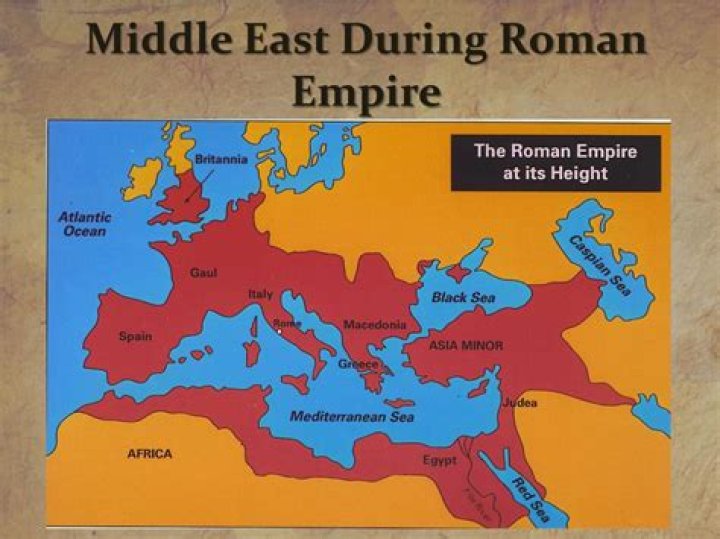
Greeks, Romans, Arabs. Alexander the Great invaded the region with an army of Macedonians and Greeks in the 300’s B.C. and carved out a vast empire based on Greek culture. The Romans began their own conquest of the region some three centuries later.
What are the 5 Fertile Crescent empires?
- Fertile Crescent Empires.
- The Babylonian Empire.
- The Assyrian Empire.
- The Assyrian Empire.
- The New Babylonian Empire.
- The New Babylonian Empire.
- The Persian Empire.
- The Persian Empire.
What are the two powerful new empires had emerged in the Middle East by the 1400s?
Trade on a new scale The economies of the two great civilizations of the Middle East – Ancient Egypt and Mesopotamia – were built upon irrigation systems needed to make the fertile soils of the Nile and Euphrates-Tigris river plains support large populations.
What is the greatest empire in world history?1) The British Empire was the largest empire the world has ever seen. The British Empire covered 13.01 million square miles of land – more than 22% of the earth’s landmass. The empire had 458 million people in 1938 — more than 20% of the world’s population.
Article first time published onHow many Persian empires were there?
In ancient history, there were 3 main dynasties that controlled ancient Persia, a western name for the area that is modern Iran: Achaemenids, Parthians, and Sasanids.
How many countries are there in Middle East?
Middle East includes 18 countries. These are Bahrain, Cyprus, Egypt, Iran, Iraq, Israel, Jordan, Kuwait, Lebanon, Oman, Palestine, Qatar, Saudi Arabia, the Syrian Arab Republic, Turkey, the United Arab Emirates and Yemen.
What was the last great empire of the Middle East?
Since the 7th century CE, all Middle East empires, with the exception of the Byzantine Empire, some of them claiming the titles of Islamic caliphate. The last major empire based in the region was the Ottoman Empire.
What were the three major empires of the ancient Near East between the eighth and fifth centuries?
- Achaemenid Empire.
- Elam.
- Medes.
- Parthian Empire.
What are the ancient Near East civilizations?
The ancient Near East refers to early civilizations in a region roughly corresponding to the modern Middle East: Mesopotamia (modern Iraq and Syria), Anatolia (modern Turkey), the Levant (modern Syria, Lebanon, Israel, Palestine, and Jordan), as well as Persia (modern Iran), and Ancient Egypt, from the beginnings of …
What two empires split because of World War 1?
The First World War brought about the collapse of four multinational empires – the Russian empire in 1917, and then the Ottoman, Austro-Hungarian, and German empires in 1918. They collapsed in defeat and revolution.
What new countries were created in the Middle East after ww1?
Poland, Lithuania, Latvia, and Estonia are new countries that were formed from the Russian Empire. Next, let’s look at how the British and French carved up the Middle-East into zones.
Was Greece part of the Ottoman Empire?
Greece came under Ottoman rule in the 15th century, in the decades before and after the fall of Constantinople. During the following centuries, there were sporadic but unsuccessful Greek uprisings against Ottoman rule.
Who ruled the Middle East before the Ottoman Empire?
From the 3rd century up to the course of the 7th century AD, the entire Middle East was dominated by the Byzantines and the Sasanian Empire. From the 7th century, a new power was rising in the Middle East, that of Islam.
Why did civilization start in the Middle East?
The middle east was the first place it could have started because of all the places on the planet it had the most wild grains and animals that could be domesticated. Wheat, Barley various legumes, sheep, cattle, goats.
What was Middle East called before?
History of the Region The area now designated as the Middle East was known as the Near East in medieval times. It is reputed as the cradle of civilization as it was home to some of the most ancient human developments.
What are the 7 World empires?
- Persian empire. Also known as the Achaemenian Empire, the kingdom created under Cyrus the Great stretched from Iran into Central Asia and Egypt.
- Han dynasty. …
- Umayyad Caliphate. …
- Mongol empire. …
- Ottoman Empire. …
- Spanish empire. …
- Russian Empire. …
- British Empire.
What empires exist today?
Officially, there are no empires now, only 190-plus nation-states. Yet the ghosts of empires past continue to stalk the Earth.
What was the first great empire?
Akkadia was the world’s first empire. It was established in Mesopotamia around 4,300 years ago after its ruler, Sargon of Akkad, united a series of independent city states.
Why is it called Byzantine Empire?
How did the Byzantine Empire get its name? … The name refers to Byzantium, an ancient Greek colony and transit point that became the location of the Byzantine Empire’s capital city, Constantinople. Inhabitants of the Byzantine Empire would have self-identified as Romaioi, or Romans.
Is Mesopotamia an empire?
It fell to Alexander the Great in 332 BC, and after his death, it became part of the Greek Seleucid Empire. … Around 150 BC, Mesopotamia was under the control of the Parthian Empire. Mesopotamia became a battleground between the Romans and Parthians, with western parts of Mesopotamia coming under ephemeral Roman control.
Who conquered the Byzantine Empire?
Fall of Constantinople, (May 29, 1453), conquest of Constantinople by Sultan Mehmed II of the Ottoman Empire. The dwindling Byzantine Empire came to an end when the Ottomans breached Constantinople’s ancient land wall after besieging the city for 55 days.
Were is Mesopotamia located?
Mesopotamia is thought to be one of the places where early civilization developed. It is a historic region of West Asia within the Tigris-Euphrates river system. In fact, the word Mesopotamia means “between rivers” in Greek.
When did Assyrians exist?
The Assyrian Empire was a collection of united city-states that existed from 900 B.C.E. to 600 B.C.E., which grew through warfare, aided by new technology such as iron weapons.
Was Egypt in the Fertile Crescent?
Because of this region’s relatively abundant access to water, the earliest civilizations were established in the Fertile Crescent, including the Sumerians. Its area covers what are now southern Iraq, Syria, Lebanon, Jordan, Palestine, Israel, Egypt, and parts of Turkey and Iran.
What was the smallest empire?
Yep that’s it 😉 Elba has an area of 224 square kilometers or 96 square miles. Thus Napoleon’s rule of Elba in 1814-1815 could be called the smallest empire in history.